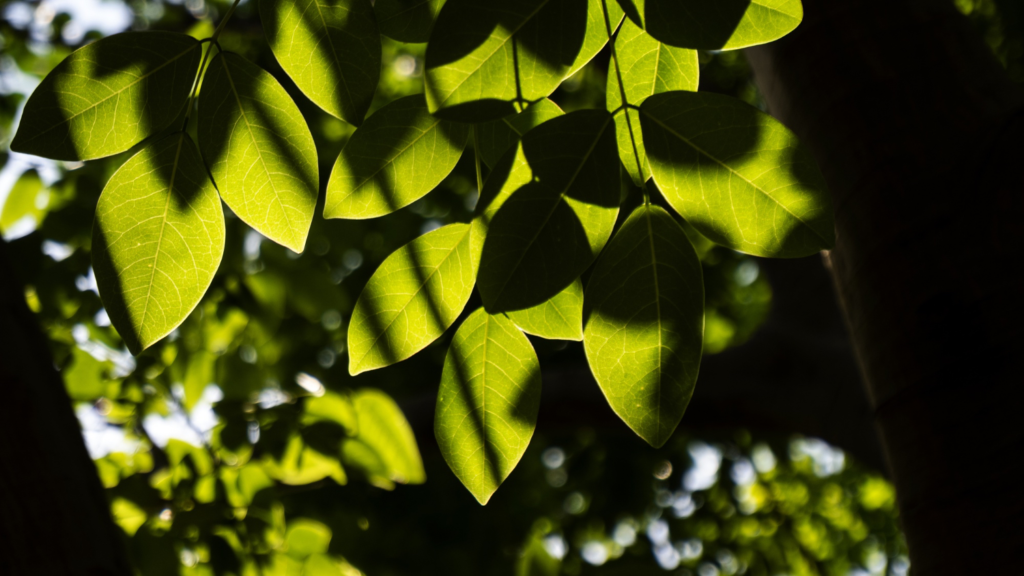
Urban forests face intensifying climate change, urban heat, and population growth, all of which strain ecological systems and public health. As living green infrastructure, urban forests regulate temperature, manage water, and reduce environmental risk. Their long-term health matters because resilient urban forests strengthen sustainability and liveability. Read how the City of Melbourne aligns canopy cover expansion, species diversity thresholds, and vegetation health targets with international benchmarks for resilient urban forests.
Climate Adaptation in Urban Forests
An urban forest is a network of trees and vegetation that functions as critical green infrastructure. It integrates ecological processes with built environments to support climate adaptation, biodiversity, and public health. Rising temperatures and extreme weather increase tree stress and the risk of mortality. Urban forests respond through species selection, spatial distribution, and adaptive management aligned with projected climate conditions. This systems approach reduces vulnerability while sustaining ecosystem services such as shade and cooling.
Canopy Cover and Heat Regulation
Urban forests mitigate the urban heat island effect through canopy cover and evapotranspiration. Tree canopies lower surface and air temperatures by shading streets and buildings. These cooling effects improve pedestrian comfort and reduce energy demand in surrounding buildings. Measurable canopy cover supports spatial planning and long-term asset management. Expanding canopy in heat-exposed and low-shade areas strengthens thermal resilience.
Species Diversity and Ecological Stability
Urban forests rely on species diversity to limit exposure to systemic pests and diseases. Overreliance on a narrow species base increases the risk of widespread canopy loss. Balanced representation across species, genera, and families distributes biological risk. This ecological structure strengthens resistance to pathogens and climate extremes. Diverse urban forests maintain function even when individual species decline.
Soil Moisture and Urban Ecosystem Function
Urban forest health depends on adequate soil volume and moisture retention. Soil compaction and runoff reduce tree vitality and long-term growth. Integrating stormwater capture improves water availability and supports vegetation performance. Coordinated soil and water management enhances biodiversity and ecosystem stability. This integrated model positions the urban forest as living infrastructure within the urban environment.
Case Study: City of Melbourne Urban Forest Strategy
The City of Melbourne adopted its Urban Forest Strategy in 2012 as a long-term policy framework. The strategy operates within the City of Melbourne planning and policy system. It aligns with instruments such as the Planning Scheme Amendment C162, the Municipal Strategic Statement, and the Total Watermark: City as a Catchment Strategy 2009. It establishes measurable targets and management standards for the public realm tree population.
The strategy sets a canopy cover target to increase the public realm canopy from 22 percent to 40 percent by 2040. It introduces formal diversity thresholds that limit any single tree species to no more than 5 percent of the population, any genus to 10 percent, and any family to 20 percent. It sets a vegetation health target requiring 90 percent of the tree population to be healthy by 2040. These quantitative requirements guide species selection and renewal planning.
Implementation mechanisms include proactive tree replacement planning based on lifecycle modelling and risk assessment. Modelling indicated that 23 percent of trees would reach the end of their useful life within 10 years and 39 percent within 20 years. The strategy integrates water-sensitive urban design standards to improve soil moisture and manage stormwater. It also links to companion documents, such as the Urban Forest Diversity Guidelines and Precinct Plans, that support compliance and monitoring.
Institutional responsibility rests with the City of Melbourne, which coordinates planning, planting, maintenance, and community consultation. The strategy embeds community engagement as a formal objective and establishes structured consultation processes. By expanding canopy, increasing diversity, and improving soil and water management, the initiative strengthens climate adaptation, reduces heat exposure, and supports long-term urban sustainability.
Conclusion
Urban forests function as essential green infrastructure that supports climate adaptation, ecological stability, and public health. Their performance depends on canopy expansion, species diversity, and integrated soil and water management. The City of Melbourne demonstrates how measurable targets, regulatory alignment, and institutional coordination can translate these principles into practice. Strengthening urban forests through structured governance and technical standards enhances long-term resilience, reduces heat exposure, and secures sustainable urban environments.
Circular Economy and Liveable Cities (Cambridge University Press)
The Circular Economy and Liveable Cities, edited by Robert C. Brears, Our Future Water, has been published. This essential guide delivers actionable strategies and best practices for implementing circular economy, climate resilience, and sustainability in urban environments, with global examples from leading cities like Tokyo, New York, and Singapore to help planners, policymakers, and researchers build liveable and sustainable cities for the future.
2nd Edition of Nature-Based Solutions to 21st Century Challenges (Routledge)
Fully revised and updated, the second edition of Nature-Based Solutions to 21st Century Challenges by Robert C. Brears offers a timely and systematic review of how working with nature can address today’s most pressing environmental and societal issues. Featuring new case studies from across the globe, expanded insights on public policy, AI, and community-led initiatives, this edition is essential reading for anyone shaping a sustainable future.
Shape the Future of Sustainability: Contribute to Springer Nature’s Landmark Publications
As Editor-in-Chief, Robert C. Brears invites experts, researchers, and practitioners to contribute to impactful and forward-thinking publications from Springer Nature. These comprehensive Handbooks and Encyclopedias explore Nature-Based Solutions, sustainable resource management, ecosystem well-being, and the global energy transition.
- Palgrave Handbook of Nature-Based Solutions
- Palgrave Encyclopedia of Sustainable Resources and Ecosystem Resilience
- Palgrave Handbook of Ecosystems and Human Well-Being
- Palgrave Handbook of Energy Transition and Renewable Energy
- Palgrave Handbook of Urban Climate and Disaster Resilience
- Palgrave Handbook of Social Transformations in Science, Innovation, and Education
Shape the Future of Climate Resilience: Contribute to Palgrave’s Pivot Series
As Series Editor, Robert C. Brears invites experts to contribute to Palgrave Studies in Climate Resilient Societies, a leading Pivot series (25,000–50,000 words) exploring climate resilience, policy innovation, and sustainability strategies.
For more details, visit: Seeking Authors — Palgrave Studies in Climate Resilient Societies
📚 Explore the Full Book Collection on Nature-Based Solutions (NBS)
Harness the power of nature to tackle today’s climate and development challenges. Curated by Our Future Water and Global Climate Solutions, this collection offers practical frameworks for embedding NBS into policy, planning, and implementation.
🌱 Strategies for integrating NBS into planning, finance, and ecosystem restoration
🌍 Approaches that enhance biodiversity, climate adaptation, and resilience
📘 Tools for applying NBS across sectors and governance systems
Click here to explore the complete collection.