🌍 Global Climate Solutions
Exploring the intersection of technology, economics, and environmental stewardship.
This week, we spotlight how urban agriculture is reshaping cities through local food production, sustainability, and community resilience.
🌿 Urban Agriculture for Sustainable Cities
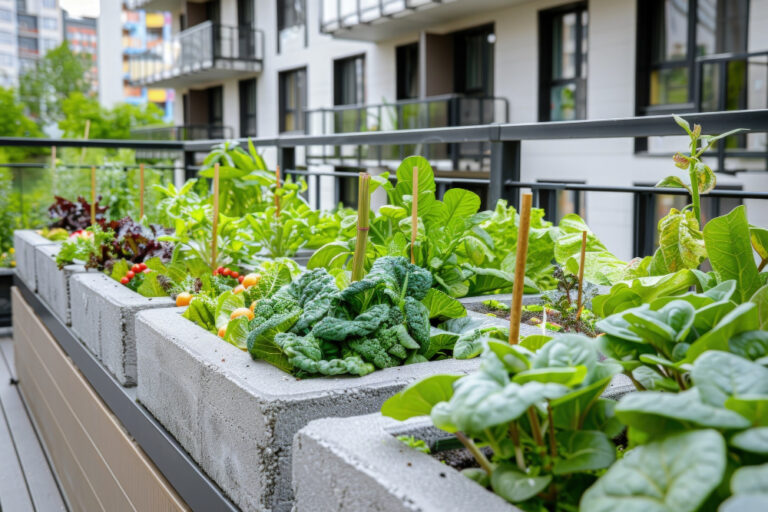
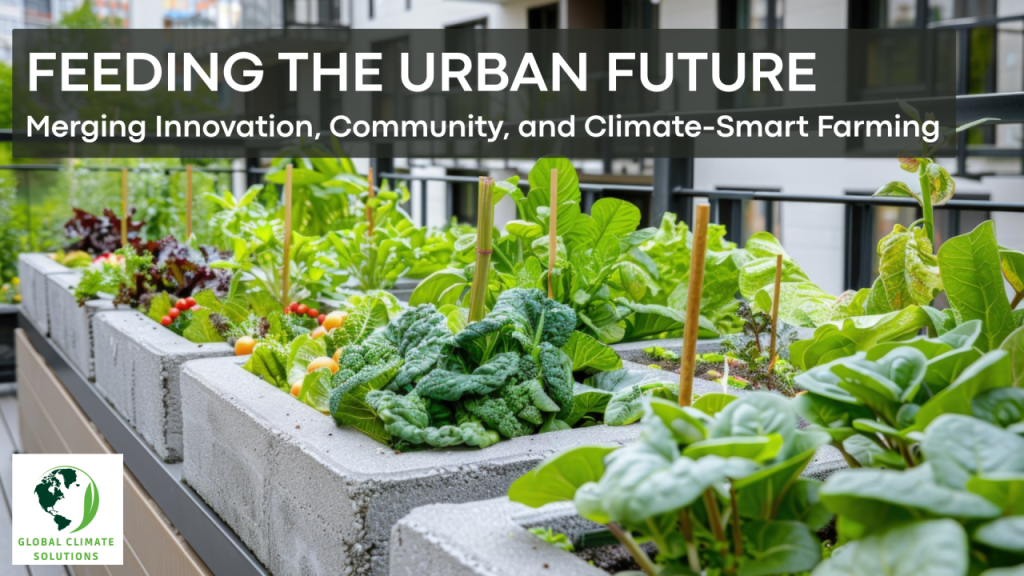
Urban agriculture transforms rooftops, vacant lots, and indoor spaces into productive food sources. By reducing transport emissions and food imports, it strengthens local food security while promoting sustainability.
Using hydroponics, aquaponics, and vertical farming, urban agriculture maximizes limited space, conserves water, and reduces pollution—offering efficient, climate-smart food systems for growing urban populations.
🏙️ Social and Economic Benefits
Community gardens foster connection, education, and access to nutritious food in underserved areas. Urban farming also drives entrepreneurship, job creation, and resilient local economies built around fresh, sustainable produce.
🔆 Case Study: Maryland’s Small Farm and Urban Agriculture Program
Maryland’s program funds sustainable farming through conservation grants, supporting urban and small-scale farms. Its cover crop grants promote climate-smart practices that improve soil health, water quality, and food system resilience.
📖 Read More
Read the full article by Robert C. Brears to explore how urban agriculture boosts food security, sustainability, and livelihoods. Learn from Maryland’s innovative approach to city-based farming.
Key Takeaways
Urban agriculture strengthens food security, supports local economies, and builds sustainable cities. By integrating innovation and policy, it cultivates resilience from the ground up.
THE FUTURE OF WATER AND FOOD FORUM: Innovation, Circularity & Resilience
Join our full-day hybrid forum by Our Future Water and EIT Food to explore bold solutions for sustainable water–food systems. Engage with thought leaders, discover cutting-edge technologies, participate in interactive workshops, and connect with peers shaping the future. Learn, collaborate, and gain actionable tools to advance circular, climate-resilient systems — either in Berlin or online from anywhere in the world.
PUBLISHED: Circular Economy and Liveable Cities (Cambridge University Press)
The Circular Economy and Liveable Cities, edited by Robert C. Brears, Our Future Water, has been published. This essential guide delivers actionable strategies and best practices for implementing circular economy, climate resilience, and sustainability in urban environments, with global examples from leading cities like Tokyo, New York, and Singapore to help planners, policymakers, and researchers build liveable and sustainable cities for the future.
📘 Coming Soon — 2nd Edition of Nature-Based Solutions to 21st Century Challenges (Routledge)
Fully revised and updated, the second edition of Nature-Based Solutions to 21st Century Challenges by Robert C. Brears offers a timely and systematic review of how working with nature can address today’s most pressing environmental and societal issues. Featuring new case studies from across the globe, expanded insights on public policy, AI, and community-led initiatives, this edition is essential reading for anyone shaping a sustainable future.
📚 Explore the Full Book Collection on Green Infrastructure Strategies
Advance urban resilience with practical guidance from Our Future Water and Global Climate Solutions. This essential collection offers proven approaches for designing, implementing, and maintaining multifunctional green infrastructure systems.
🌿 Frameworks for integrating nature into urban environments
🏙️ Strategies for aligning ecological design with planning and policy priorities
🔧 Tools to support long-term performance and adaptive maintenance
Click here to explore the complete collection.
📚 Shape the Future of Sustainability: Contribute to Springer Nature’s Landmark Publications
As Editor-in-Chief, Robert C. Brears invites experts, researchers, and practitioners to contribute to impactful and forward-thinking publications from Springer Nature. These comprehensive Handbooks and Encyclopedias explore Nature-Based Solutions, sustainable resource management, ecosystem well-being, and the global energy transition.
- Palgrave Handbook of Nature-Based Solutions
- Palgrave Encyclopedia of Sustainable Resources and Ecosystem Resilience
- Palgrave Handbook of Ecosystems and Human Well-Being
- Palgrave Handbook of Energy Transition and Renewable Energy
- Palgrave Handbook of Urban Climate and Disaster Resilience
- Palgrave Handbook of Social Transformations in Science, Innovation, and Education
📚 Shape the Future of Climate Resilience: Contribute to Palgrave’s Pivot Series
As Series Editor, Robert C. Brears invites experts to contribute to Palgrave Studies in Climate Resilient Societies, a leading Pivot series (25,000–50,000 words) exploring climate resilience, policy innovation, and sustainability strategies.
📩 For more details, visit: Seeking Authors — Palgrave Studies in Climate Resilient Societies