🌍 Global Climate Solutions
Exploring the intersection of technology, economics, and environmental stewardship.
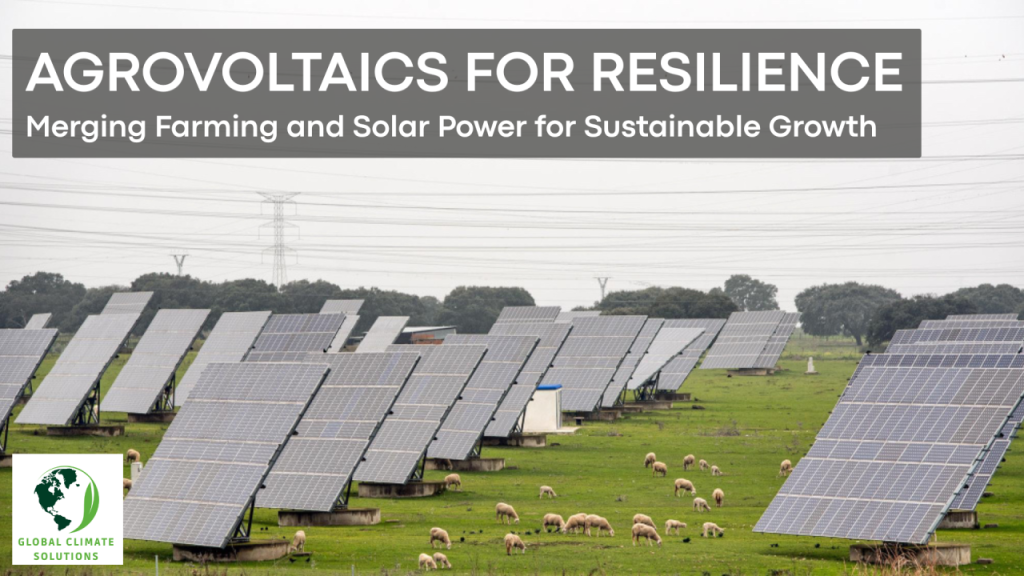
This week, we spotlight how agrovoltaics is transforming farmland into dual-use systems for crops and clean energy.
🌾 Agrovoltaics: Farming Meets Solar Energy
Agrovoltaics integrates solar panels with farmland, allowing crops to grow beneath elevated arrays. This dual-use design conserves water, shields crops from extreme weather, and creates new revenue streams through renewable energy generation.
Leafy greens, tomatoes, and root vegetables thrive under panels, benefiting from shade and improved moisture retention. Land can also support livestock grazing, further enhancing efficiency and sustainability.
⚡ Energy and Economic Benefits
Farmers generate renewable power for on-site use or sale to the grid, reducing emissions and diversifying income. Agrovoltaics strengthens rural economies while contributing to global energy transitions.
🔆 Case Study: Colorado’s Agrivoltaics Grant Program
Colorado’s Department of Agriculture launched a $500,000 grant program in 2023 to expand agrivoltaics. Funding supports projects that test system impacts, showcase innovation, and help farmers adapt to sustainable energy practices.
📖 Read More
Read the full article by Robert C. Brears to explore how agrovoltaics is reshaping agriculture and renewable energy. Learn how initiatives like Colorado’s program inspire sustainable farming innovation.
Key Takeaways
Agrovoltaics optimizes land use by merging food and energy production. This approach enhances resilience, conserves resources, and provides farmers with new opportunities for sustainability.
PUBLISHED: Circular Economy and Liveable Cities (Cambridge University Press)
The Circular Economy and Liveable Cities, edited by Robert C. Brears, Our Future Water, has been published. This essential guide delivers actionable strategies and best practices for implementing circular economy, climate resilience, and sustainability in urban environments, with global examples from leading cities like Tokyo, New York, and Singapore to help planners, policymakers, and researchers build liveable and sustainable cities for the future.
📘 Coming Soon — 2nd Edition of Nature-Based Solutions to 21st Century Challenges (Routledge)
Fully revised and updated, the second edition of Nature-Based Solutions to 21st Century Challenges by Robert C. Brears offers a timely and systematic review of how working with nature can address today’s most pressing environmental and societal issues. Featuring new case studies from across the globe, expanded insights on public policy, AI, and community-led initiatives, this edition is essential reading for anyone shaping a sustainable future.
📚 New Book Titles on Agriculture and Sustainability
📚 Climate-Smart Agriculture: Technologies and nature-based solutions for a resilient future.
📚 Zero Food Waste: Strategies, innovations, and sustainable solutions for a circular food system.
📚 Urban Agriculture for Sustainable Cities: Improving food security, conserving water, and building sustainable systems.
📚 Shape the Future of Sustainability: Contribute to Springer Nature’s Landmark Publications
As Editor-in-Chief, Robert C. Brears invites experts, researchers, and practitioners to contribute to impactful and forward-thinking publications from Springer Nature. These comprehensive Handbooks and Encyclopedias explore Nature-Based Solutions, sustainable resource management, ecosystem well-being, and the global energy transition.
- Palgrave Handbook of Nature-Based Solutions
- Palgrave Encyclopedia of Sustainable Resources and Ecosystem Resilience
- Palgrave Handbook of Ecosystems and Human Well-Being
- Palgrave Handbook of Energy Transition and Renewable Energy
- Palgrave Handbook of Urban Climate and Disaster Resilience
- Palgrave Handbook of Social Transformations in Science, Innovation, and Education
📚 Shape the Future of Climate Resilience: Contribute to Palgrave’s Pivot Series
As Series Editor, Robert C. Brears invites experts to contribute to Palgrave Studies in Climate Resilient Societies, a leading Pivot series (25,000–50,000 words) exploring climate resilience, policy innovation, and sustainability strategies.
📩 For more details, visit: Seeking Authors — Palgrave Studies in Climate Resilient Societies