Transport systems remain major sources of greenhouse gas emissions, while limited charging access can constrain vehicle electrification. Public infrastructure can support climate resilience by reducing dependence on fossil fuels and enabling cleaner mobility choices. Transport decarbonization therefore matters for cities and governments pursuing long-term climate targets. Examine how New York City’s PlugNYC charging network supports global climate action.
Charging Access and Electrification
Low-carbon transport systems require infrastructure that enables drivers to replace fossil fuel-powered vehicles with electric vehicles (EVs). Charging availability becomes particularly important where residents lack private driveways, garages, or other off-street parking. Public charging addresses this constraint by locating energy infrastructure where vehicles already park and operate. Wider access can therefore remove a practical barrier to EV adoption while supporting transport-related emissions reductions.
Curbside Infrastructure and Urban Density
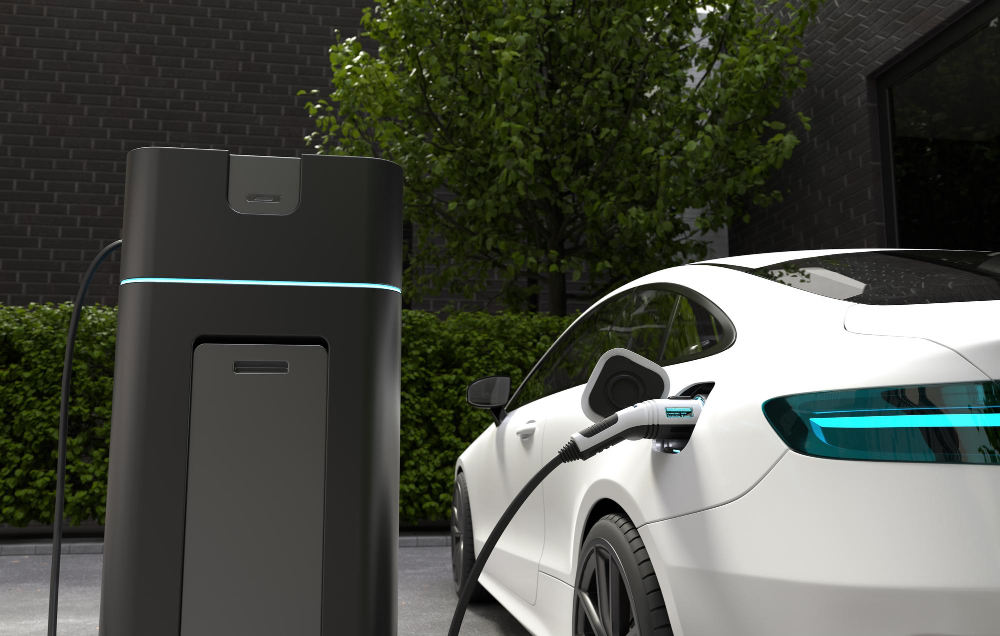
Dense urban areas create distinct infrastructure challenges because many vehicle owners depend on street parking. Curbside charging can serve these users without requiring access to private property or dedicated residential parking. Level 2 (L2) charging provides one approach for delivering electricity through publicly accessible curbside locations. Fast charging and municipal parking chargers can complement these installations by creating a broader network across different travel and parking patterns.
Targeted Charging Investment
Charging investment can target areas where private infrastructure provision remains limited, and demand is concentrated. Selection criteria can include residential density, limited off-street parking, and concentrations of professional drivers who need regular charging access. This approach links infrastructure planning to identifiable barriers to electrification, rather than distributing chargers without demand considerations. Public engagement can also inform proposed locations and help agencies understand local charging requirements before construction.
Integrated Curb Management
Low-carbon transport infrastructure can support several public needs when agencies coordinate charging with wider street projects. Electrical connections installed during construction can provide capacity for future e-bike charging, bikeshare facilities, secure bicycle parking, or cargo-bike operations. Coordination with pedestrian, bicycle, public realm, and bus projects can preserve flexibility as curbside demands change. Payment systems and parking controls can further support reliable access by linking charging spaces directly to active vehicle charging.
Operational and Financial Management
Public charging networks require operating arrangements that address maintenance, pricing, payment, and space enforcement. Agencies can use customer fees to offset operating costs while setting prices that encourage reasonable charger turnover. Multiple payment methods can make public infrastructure usable by drivers with different payment preferences. Enforcement against unplugged vehicles occupying charging spaces helps preserve infrastructure availability and supports effective low-carbon transport operations.
Case Study: New York City PlugNYC Charging Network
New York City Department of Transportation (NYC DOT) launched an expansion of its PlugNYC curbside charging network in 2026. The policy initiative supports the city’s net-zero greenhouse gas emissions goal for 2050 and the Taxi and Limousine Commission’s Green Rides initiative. NYC DOT plans 600 new curbside charging points over three years across all five boroughs. The expansion will increase the network from 88 existing L2 points to nearly 700.
Site selection targets dense neighborhoods with limited off-street parking and high concentrations of Taxi and Limousine Commission (TLC)-licensed drivers. The project also targets low- and moderate-income communities underserved by private charging investment. Public feedback through NYC DOT’s project portal informs proposed locations. Each station will contain at least two charger posts with two charging points each, providing four points per site.
Technical implementation includes PlugNYC branding and electrical connections that can support e-micromobility charging where feasible. NYC DOT will coordinate locations with pedestrian, bicycle, public realm, and bus projects. The New York Power Authority will procure equipment and construction subcontractors for the curbside installations. NYC DOT will operate and maintain the chargers through contract arrangements.
Pricing remains to be determined but will focus on affordability and reasonable turnover. Customer fee revenue will help offset operating costs, while drivers can pay per kilowatt hour through apps or credit cards. Parking controls provide an enforcement mechanism because only plugged-in EVs may legally occupy designated charging spaces. Together, targeted siting, technical integration, institutional procurement, pricing, and enforcement support wider vehicle electrification and reduced transport emissions.
Conclusion
Low-carbon transport systems depend on accessible infrastructure, coordinated planning, and operational rules that make cleaner mobility practical. Integrating charging investment with wider transport policy can support emissions reduction while strengthening long-term climate action.
Circular Economy and Liveable Cities (Cambridge University Press)
The Circular Economy and Liveable Cities, edited by Robert C. Brears, Our Future Water, has been published. This essential guide delivers actionable strategies and best practices for implementing circular economy, climate resilience, and sustainability in urban environments, with global examples from leading cities like Tokyo, New York, and Singapore to help planners, policymakers, and researchers build liveable and sustainable cities for the future.
2nd Edition of Nature-Based Solutions to 21st Century Challenges (Routledge)
Fully revised and updated, the second edition of Nature-Based Solutions to 21st Century Challenges by Robert C. Brears offers a timely and systematic review of how working with nature can address today’s most pressing environmental and societal issues. Featuring new case studies from across the globe, expanded insights on public policy, AI, and community-led initiatives, this edition is essential reading for anyone shaping a sustainable future.
Shape the Future of Sustainability: Contribute to Springer Nature’s Landmark Publications
As Editor-in-Chief, Robert C. Brears invites experts, researchers, and practitioners to contribute to impactful and forward-thinking publications from Springer Nature. These comprehensive Handbooks and Encyclopedias explore Nature-Based Solutions, sustainable resource management, ecosystem well-being, and the global energy transition.
- Palgrave Encyclopedia of Sustainable Resources and Ecosystem Resilience
- Palgrave Handbook of Energy Transition and Renewable Energy
- Palgrave Handbook of Urban Climate and Disaster Resilience
- Palgrave Handbook of Social Transformations in Science, Innovation, and Education
Shape the Future of Climate Resilience: Contribute to Palgrave’s Pivot Series
As Series Editor, Robert C. Brears invites experts to contribute to Palgrave Studies in Climate Resilient Societies, a leading Pivot series (25,000–50,000 words) exploring climate resilience, policy innovation, and sustainability strategies.
For more details, visit: Seeking Authors — Palgrave Studies in Climate Resilient Societies