
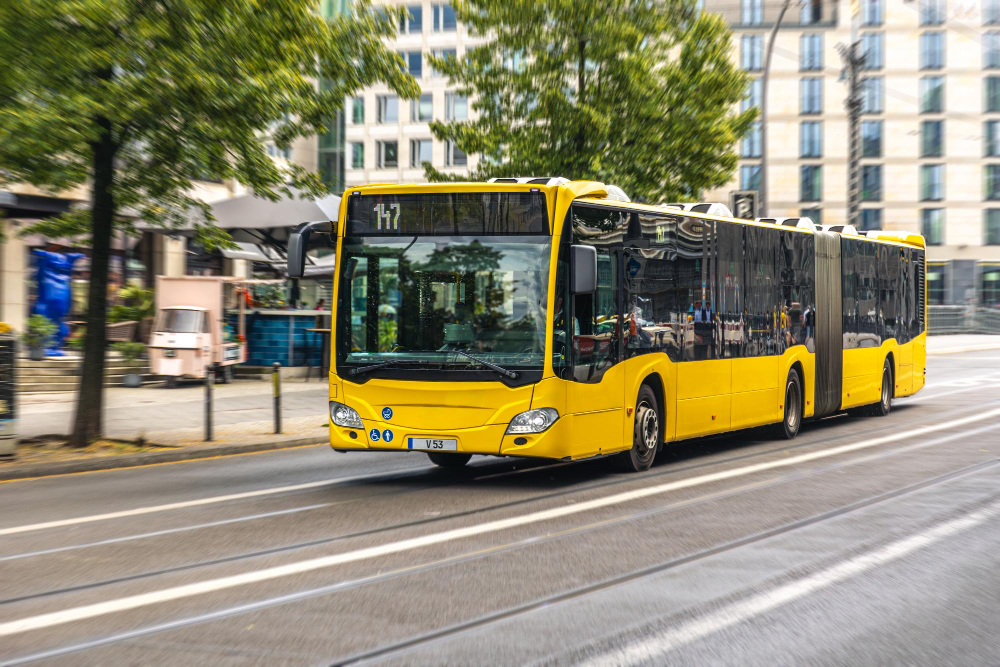
Electric public transport systems reduce transport emissions while supporting more efficient and resilient urban mobility. Expanding electric bus fleets also requires coordinated investment in vehicles, charging infrastructure, operational planning, and safety systems. Governments increasingly view bus electrification as an important component of national climate and sustainability strategies. Examine how Singapore’s Land Transport Authority electric bus deployment program supports global climate action.
Electric Public Transport Systems
Electric Public Transport Systems refer to bus, rail, and other passenger transport networks powered by electricity instead of conventional fossil fuels. These systems reduce direct tailpipe emissions while supporting broader climate resilience and sustainability objectives. Successful deployment depends on coordinated investment in vehicles, charging infrastructure, energy supply, maintenance capability, and operational planning. Long-term implementation also requires policies that align fleet replacement schedules with infrastructure readiness.
Fleet Electrification Strategy
Fleet electrification replaces conventional diesel vehicles with electric alternatives over planned procurement cycles. This approach allows transport authorities to modernize assets while maintaining reliable passenger services. Procurement strategies increasingly assess both technical performance and total life-cycle cost rather than focusing solely on purchase price. Progressive fleet replacement also enables operators to gain operational experience before fully electrifying their networks.
Charging Infrastructure Integration
Electric Public Transport Systems depend on reliable charging infrastructure that supports daily operations. Charging facilities must be integrated into depots and transport hubs to minimize operational disruption. Infrastructure planning should consider future fleet expansion, charging capacity, and maintenance requirements. Coordinated infrastructure investment ensures that vehicle deployment and charging capability develop at compatible rates.
Operational Performance and Safety
Modern electric buses incorporate technologies that improve operational efficiency and passenger experience. Enhanced battery capacity extends operating range and provides greater scheduling flexibility across transport networks. Digital passenger information systems improve journey information through real-time audio and visual updates. Advanced safety technologies, including collision warning systems, onboard surveillance, driver monitoring, surround view functions, and enhanced signaling systems, strengthen safety for passengers, drivers, and other road users.
Case Study: Singapore Land Transport Authority Electric Bus Deployment
The Singapore Land Transport Authority (LTA) announced on 15 December 2025 that it had awarded six contracts for 660 new electric buses comprising 360 single-deck buses and 300 double-deck buses. The procurement includes contracts awarded to ST Engineering Mobility Services in partnership with CRRC, BYD, Yutong, and Cycle & Carriage Automotive in partnership with Zhongtong Bus. The contracts also include an option to procure up to 50 additional electric buses if required. LTA stated that the new buses will be progressively deployed from the end of 2026 to replace diesel buses that have reached the end of their statutory lifespan.
The program is supported by investment in charging infrastructure. LTA called a tender in November 2025 to install electric vehicle charging systems at Mandai Bus Depot and the future Kallang, Beauty World, and Tampines North Integrated Transport Hubs. The procurement process applied a two-envelope evaluation that assessed quality before price. Evaluation considered tenderer experience, technical specifications, compliance with local regulations, and total life-cycle cost to support value-for-money procurement.
The new buses incorporate improved battery technology for longer operating ranges, passenger information display systems providing real-time audio and visual updates, and multiple safety technologies. These include onboard closed-circuit television, collision warning systems, surround view functions, driver anti-fatigue monitoring, camera mirror systems, and rear electronic display systems, as recommended by the Bus Safety Tripartite Taskforce. The new double deck buses will also feature three doors and two staircases to improve passenger boarding and alighting. LTA has committed to achieving a 100 percent cleaner energy bus fleet by 2040, with electric buses expected to comprise half of the public bus fleet by 2030.
Conclusion
Electric Public Transport Systems combine vehicle electrification, charging infrastructure, procurement processes, and operational technologies to support lower-emission urban mobility. Integrated planning and long-term policy commitments enable transport authorities to expand cleaner public transport while strengthening climate action and sustainable transport outcomes.
Circular Economy and Liveable Cities (Cambridge University Press)
The Circular Economy and Liveable Cities, edited by Robert C. Brears, Our Future Water, has been published. This essential guide delivers actionable strategies and best practices for implementing circular economy, climate resilience, and sustainability in urban environments, with global examples from leading cities like Tokyo, New York, and Singapore to help planners, policymakers, and researchers build liveable and sustainable cities for the future.
2nd Edition of Nature-Based Solutions to 21st Century Challenges (Routledge)
Fully revised and updated, the second edition of Nature-Based Solutions to 21st Century Challenges by Robert C. Brears offers a timely and systematic review of how working with nature can address today’s most pressing environmental and societal issues. Featuring new case studies from across the globe, expanded insights on public policy, AI, and community-led initiatives, this edition is essential reading for anyone shaping a sustainable future.
Shape the Future of Sustainability: Contribute to Springer Nature’s Landmark Publications
As Editor-in-Chief, Robert C. Brears invites experts, researchers, and practitioners to contribute to impactful and forward-thinking publications from Springer Nature. These comprehensive Handbooks and Encyclopedias explore Nature-Based Solutions, sustainable resource management, ecosystem well-being, and the global energy transition.
- Palgrave Handbook of Nature-Based Solutions
- Palgrave Encyclopedia of Sustainable Resources and Ecosystem Resilience
- Palgrave Handbook of Energy Transition and Renewable Energy
- Palgrave Handbook of Urban Climate and Disaster Resilience
- Palgrave Handbook of Social Transformations in Science, Innovation, and Education
Shape the Future of Climate Resilience: Contribute to Palgrave’s Pivot Series
As Series Editor, Robert C. Brears invites experts to contribute to Palgrave Studies in Climate Resilient Societies, a leading Pivot series (25,000–50,000 words) exploring climate resilience, policy innovation, and sustainability strategies.
For more details, visit: Seeking Authors — Palgrave Studies in Climate Resilient Societies


