Architects and building engineers
Practitioners framing climate-sensitive design criteria and reviewing interacting building and site systems.

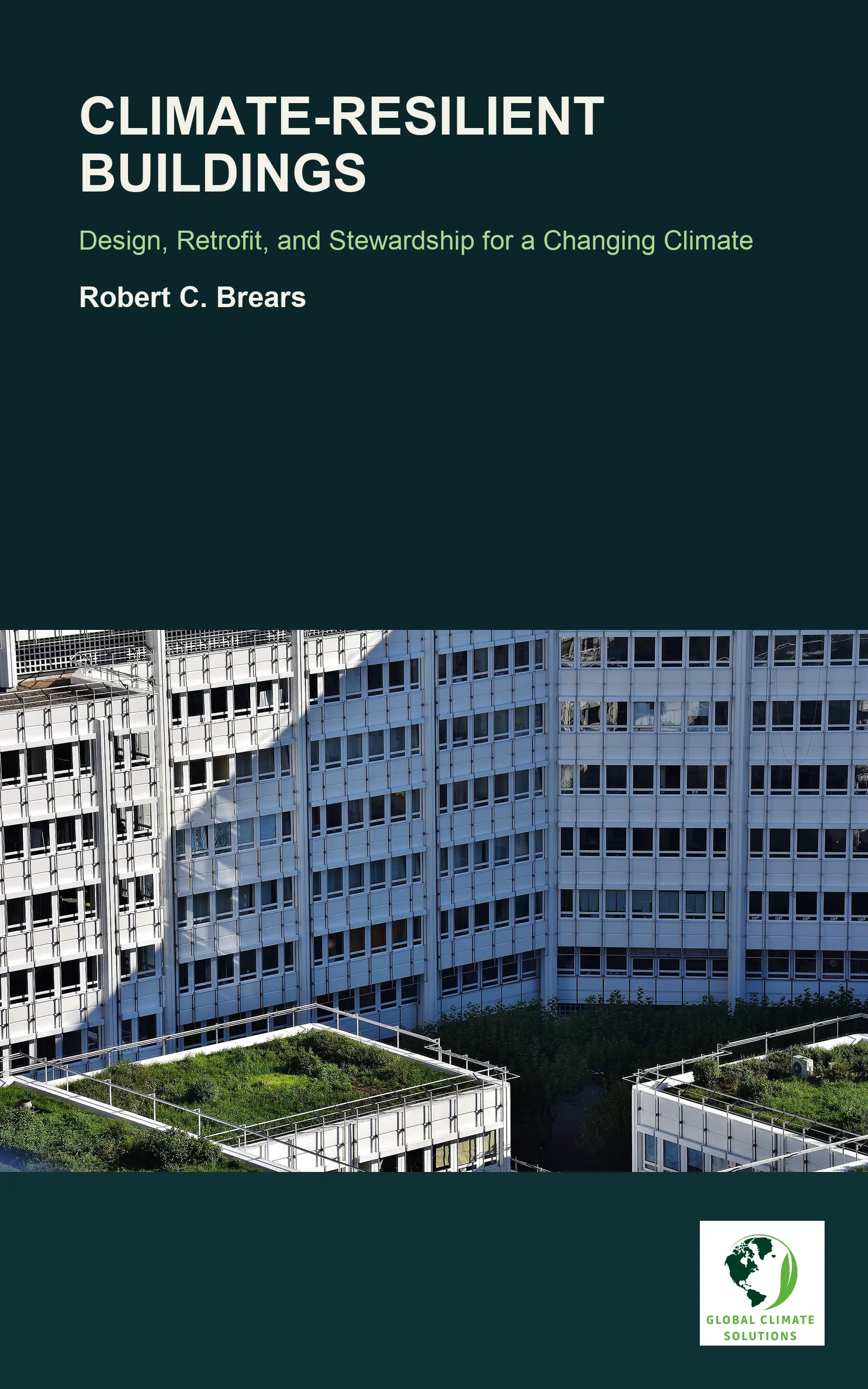
Design, Retrofit, and Stewardship for a Changing Climate
ISBN 978-1-991367-08-2 · Global Climate Solutions · First EditionHeat, flooding, wildfire, and service failures expose the gap between a building that meets a standard and one that protects people through disruption.
Climate-Resilient Buildings helps architects, engineers, owners, housing providers, and public planners connect technical decisions with daily operations. Its evidence-led framework links hazard assessment, occupant needs, and infrastructure dependencies to proportionate design and investment choices.
Learn how thermal safety, water pathways, structural performance, and site conditions interact. Assess retrofit priorities using condition records, observed performance, and renewal opportunities. Understand how codes, insurance, financing, affordability, and delivery capacity shape what teams can achieve.
Robert C. Brears also examines monitoring, resident evidence, post-event review, and adaptation triggers. Readers gain a clearer basis for defining essential functions, testing assumptions, assigning responsibilities, and keeping residual risk visible. Use these principles to make resilience a continuing practice across individual properties and portfolios.
Distinguish climate hazards, building vulnerability, and external-service dependencies when assessing a property.
Evaluate thermal safety, water pathways, structural load paths, and wildfire exposure as interacting design questions.
Use condition records, observed performance, resident evidence, and renewal windows to prioritize retrofit work.
Assess how codes, enforcement capacity, insurance, financing, and affordability affect delivery of resilient buildings.
Design proportionate monitoring and post-event reviews that protect privacy and support occupant-sensitive decisions.
Maintain review cycles and adaptation triggers that make assumptions, responsibilities, and residual risk explicit.
Resilience as a Building and Portfolio Responsibility
Reading Climate Risk at Building Scale
Designing for Thermal Safety, Water, and Extreme Events
Retrofitting Existing Buildings and Managing Portfolios
Governance, Finance, and Implementation Capacity
Operating, Learning, and Adapting Over Time
Building Resilience as Disciplined Long-Term Stewardship
Practitioners framing climate-sensitive design criteria and reviewing interacting building and site systems.
Decision-makers linking condition, performance, maintenance, and capital planning across existing assets.
Teams coordinating retrofit delivery, resident communication, affordability, and equitable risk reduction.
Professionals aligning standards, finance, delivery capacity, continuity planning, and long-term accountability.

Robert C. Brears is the founder and editor-in-chief of Global Climate Solutions. His work connects climate resilience, water security, nature-based solutions, sustainable finance and the transition to more resilient cities and industries.
View author profile →Robert C. Brears also examines monitoring, resident evidence, post-event review, and adaptation triggers. Readers gain a clearer basis for defining essential functions, testing assumptions, assigning responsibilities, and keeping residual risk visible. Use these principles to make resilience a continuing practice across individual properties and portfolios.

Vienna’s 2026 municipal housing handover shows how compact redevelopment can combine short journeys, affordable homes, and shared energy infrastructure.

Paris opened a new Petite Ceinture segment in 2026, extending a documented urban ecological corridor while managing public access and habitat protection.

Paris’s red-alert response shows how heat warnings can activate citywide outreach, cooling access, and practical support for children.