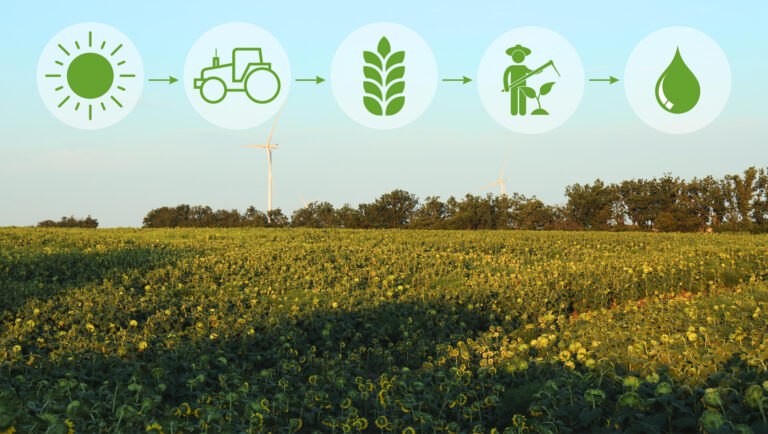
Climate change requires transformative solutions that go beyond traditional mitigation and adaptation measures. Innovative approaches — spanning technology, finance, governance, and social systems — are redefining how societies respond to climate risks. Explore how Costa Rica’s National Decarbonization Plan strengthens global climate action by aligning sustainable practices with international benchmarks.
Integrating Systems Thinking
Addressing climate change effectively demands a systems-based approach. This involves understanding how sectors such as energy, transport, agriculture, and waste management are interconnected. Integrating systems thinking allows policymakers to design coordinated strategies that maximize co-benefits — for instance, improving air quality while reducing greenhouse gas (GHG) emissions. Such holistic frameworks also ensure that actions in one domain do not undermine progress in another.
Leveraging Technology and Data
Digitalization, artificial intelligence, and the Internet of Things are advancing climate monitoring, prediction, and management. From precision agriculture and renewable-energy optimization to real-time carbon tracking, data-driven tools enable faster, more informed decision-making. Technology also supports decentralized climate solutions — such as microgrids and community-level renewable systems — that enhance resilience and inclusivity.
Promoting Nature-Based and Circular Solutions
Nature-based solutions (NBS) and circular-economy models are central to sustainable climate strategies. Reforestation, wetland restoration, and urban green infrastructure sequester carbon while protecting biodiversity and livelihoods. Circularity complements these efforts by minimizing waste, extending product life cycles, and recovering resources — thereby reducing emissions embedded in production and consumption systems.
Financing Innovation and Green Growth
Innovative climate financing mechanisms are unlocking new sources of capital for low-carbon transitions. Green bonds, blended-finance structures, and sustainability-linked loans are driving private investment toward renewable energy, sustainable mobility, and climate-resilient infrastructure. International cooperation through climate funds and multilateral institutions remains crucial to ensure equitable access to financing, particularly for developing economies pursuing just transitions.

Strengthening Governance and Collaboration
Effective climate innovation relies on strong governance and cross-sector collaboration. Transparent monitoring, clear accountability mechanisms, and inclusive stakeholder engagement build public trust and political continuity across electoral cycles. Institutional innovation — such as creating cross-ministerial climate taskforces or integrating climate goals into national budgets — helps mainstream sustainability into every aspect of governance and economic planning.
How Costa Rica’s National Decarbonization Plan Advances Climate Innovation
Costa Rica’s National Decarbonization Plan, launched in 2019, provides a model of structured and evidence-based climate governance. The plan outlines a comprehensive roadmap to achieve net-zero greenhouse gas emissions by 2050, consistent with the Paris Agreement’s 1.5°C target. It employs a “backcasting” approach: starting from the desired long-term vision of a decarbonized economy and identifying the actions required across three implementation phases — foundations (2018–2022), inflection (2023–2030), and massive deployment (2031–2050).
The strategy encompasses all major domestic emission sources except international shipping and aviation. A cornerstone of the plan is the electrification of transport and industry, building upon the nation’s almost entirely renewable electricity mix. Investments focus on scaling public and private electric vehicles, expanding clean public transport networks, and upgrading logistics infrastructure. These actions reduce dependence on fossil fuels while creating employment opportunities in green technology sectors.
Beyond energy and transport, the plan targets emission reductions in agriculture and waste management through sustainable farming techniques and large-scale composting initiatives. The government has integrated cross-cutting measures — such as green tax reform, stakeholder participation, and just-transition frameworks — to ensure that decarbonization efforts are inclusive and socially equitable.
The plan’s credibility and institutional coherence have attracted significant international financing from the Inter-American Development Bank and the International Monetary Fund. Importantly, policy continuity was maintained after the 2022 change in government, demonstrating the resilience of Costa Rica’s governance model. By linking decarbonization to economic modernization and investment mobilization, Costa Rica positions itself as a global benchmark for integrating climate ambition with economic strategy.
Conclusion: Innovation as the Engine of Climate Transformation
Innovative approaches — combining systemic governance, advanced technology, sustainable finance, and inclusive participation — are critical to accelerating climate solutions. They enable nations to decouple growth from emissions while building resilient, equitable economies aligned with global sustainability goals.
Newly Published: Circular Economy and Liveable Cities (Cambridge University Press)
The Circular Economy and Liveable Cities, edited by Robert C. Brears, Our Future Water, has been published. This essential guide delivers actionable strategies and best practices for implementing circular economy, climate resilience, and sustainability in urban environments, with global examples from leading cities like Tokyo, New York, and Singapore to help planners, policymakers, and researchers build liveable and sustainable cities for the future.
📘 Coming Soon — 2nd Edition of Nature-Based Solutions to 21st Century Challenges (Routledge)
Fully revised and updated, the second edition of Nature-Based Solutions to 21st Century Challenges by Robert C. Brears offers a timely and systematic review of how working with nature can address today’s most pressing environmental and societal issues. Featuring new case studies from across the globe, expanded insights on public policy, AI, and community-led initiatives, this edition is essential reading for anyone shaping a sustainable future.
📚 Explore the Full Book Collection on Nature-Based Solutions (NBS)
Harness the power of nature to tackle today’s climate and development challenges. Curated by Our Future Water and Global Climate Solutions, this collection offers practical frameworks for embedding NBS into policy, planning, and implementation.
🌱 Strategies for integrating NBS into planning, finance, and ecosystem restoration
🌍 Approaches that enhance biodiversity, climate adaptation, and resilience
📘 Tools for applying NBS across sectors and governance systems
Click here to explore the complete collection.
📚 Shape the Future of Sustainability: Contribute to Springer Nature’s Landmark Publications
As Editor-in-Chief, Robert C. Brears invites experts, researchers, and practitioners to contribute to impactful and forward-thinking publications from Springer Nature. These comprehensive Handbooks and Encyclopedias explore Nature-Based Solutions, sustainable resource management, ecosystem well-being, and the global energy transition.
- Palgrave Handbook of Nature-Based Solutions
- Palgrave Encyclopedia of Sustainable Resources and Ecosystem Resilience
- Palgrave Handbook of Ecosystems and Human Well-Being
- Palgrave Handbook of Energy Transition and Renewable Energy
- Palgrave Handbook of Urban Climate and Disaster Resilience
- Palgrave Handbook of Social Transformations in Science, Innovation, and Education
📚 Shape the Future of Climate Resilience: Contribute to Palgrave’s Pivot Series
As Series Editor, Robert C. Brears invites experts to contribute to Palgrave Studies in Climate Resilient Societies, a leading Pivot series (25,000–50,000 words) exploring climate resilience, policy innovation, and sustainability strategies.
📩 For more details, visit: Seeking Authors — Palgrave Studies in Climate Resilient Societies