
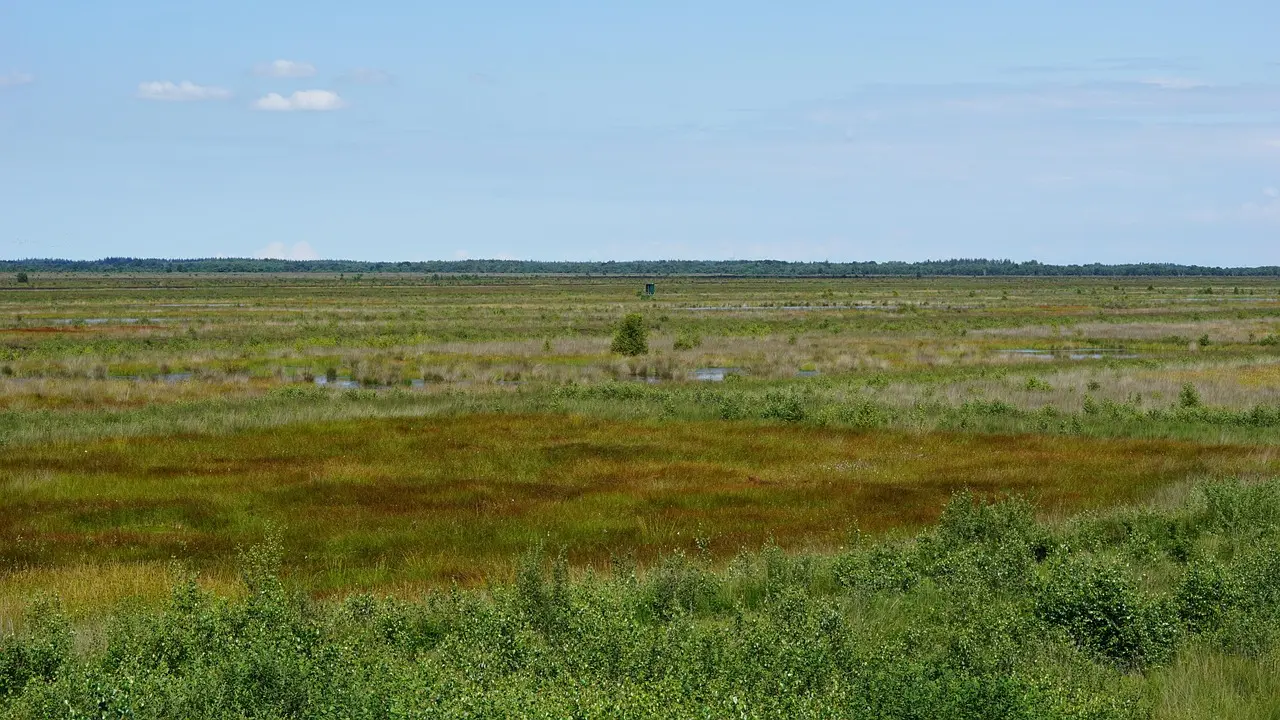
A peatland restoration boundary should follow the paths that drain the peat. Survey those paths before deciding where to put dams or where to plant. The survey can reveal who controls the outlets and which neighboring parcels will be affected when water levels rise.
Plan around the flow of water
Drainage lets oxygen reach deeper layers of peat, where it speeds the decomposition of stored organic matter. Restoring a higher water table slows that process. A field survey can show which ditches still carry water, where eroded channels bypass them, and which stretches retain water through dry weather. These observations inform where to block drains and where further work may be needed to stabilize exposed peat.
England’s grants funded partnerships
The Nature for Climate Peatland Grant Scheme asked applicants in England to cover the connected hydrological unit and show that they had permission to carry out the proposed work. Natural England’s original guidance offered up to 75 percent of project costs in most cases and up to 85 percent in qualifying exceptional cases. It excluded work already paid for through other funding.
The guidance set two distinct objectives: starting restoration on 35,000 hectares by March 2025 and cutting cumulative emissions by 5.7 million metric tons of carbon dioxide equivalent by 2050. In April 2026, Defra reported more than 23,000 hectares under restoration management since 2020 and described the use of peat, timber, and stone dams alongside native planting. The report described work underway and gave no measured emissions reduction attributable to the scheme.
Plan for repairs and follow-up
Use water levels and vegetation observations alongside records of completed works. Check whether water stays near the surface through the dry season and whether plants are recolonizing bare peat. If monitoring shows a persistent dry patch, inspect the drains and dam edges. Put the responsibility for inspections, maintenance, and access in writing while partners are still drawing up the project.
Practical takeaways
Map the connected drains first. Agree on access and who pays for maintenance. Keep separate records of completed works, observed ecological changes, and any estimated climate benefits.
Read the full peatland restoration article
From our books
Nature-Based Solutions to 21st Century Challenges, Second Edition. By Robert C. Brears. Routledge, 2025.
This book examines how ecosystem restoration can support climate adaptation, biodiversity, and water security. It covers the planning, financing, and governance of projects across landscapes, cities, and water systems. For readers considering peatland rewetting, its discussion of local constraints, trade-offs, and evaluation helps put changes in water levels alongside the wider aims of a restoration program.