A useful agricultural model starts with a decision: which management option deserves a field trial, and under what conditions? Digital twins can connect observations with simulations that make those comparisons clearer. This newsletter explores the data, local knowledge and research partnerships needed to turn that capability into practical advice.
Build the model around a management decision
Satellite images, ground sensors and weather records describe different parts of an agricultural system. Combining them in a shared geospatial environment makes it easier to relate conditions across a landscape. Agronomic models then connect those observations with assumptions about how crops, pasture or livestock respond. Updating the model with field observations helps keep its representation connected to changing conditions.
The starting point should be a practical question. An adviser might compare grazing options under different rainfall assumptions or examine how a water constraint changes a production plan. The model needs the appropriate spatial detail, time period and management variables for that question. A detailed map alone does not supply those relationships.
Use scenarios to refine the next experiment
Scenario modeling lets researchers vary an assumption and examine how the modeled system responds. Teams can compare management options, identify sensitive parameters and refine questions before committing to fieldwork. A useful comparison makes the underlying assumptions visible so agronomists and producers can judge whether the scenario reflects their circumstances. Field trials remain the means of testing how an option performs on the ground.
Australia’s National Digital Twin for agriculture
In February 2026, the Australasian Space Innovation Institute launched an A$15 million National Digital Twin for Australian Agriculture, supported by Elders, Meat & Livestock Australia and Charles Sturt University. The initiative brings satellite observations, sensors, drones, climate information and agronomic models into a common environment. It is designed to help advisers and research teams test options before investing in larger field trials.
This is shared research and decision-support infrastructure under development. Its announced capability and intended savings should not be confused with measured farm-level results. The practical lesson is the connection between national datasets, model-based experimentation and the advisers who interpret the results for producers.
Keep field knowledge inside the modeling process
The institute’s account of its EvokeAG discussions and a visit to Fragapane Farms emphasizes continuous field data and agronomists’ local knowledge. The visit also helped clarify where the technology could be most useful: broadacre cropping, pasture intelligence and natural capital monitoring. Fast-cycle horticulture has different operational demands, including reliability and short payback periods. Choosing an application therefore requires understanding the production system as well as the available technology.
Lessons for agricultural decision support
A shared platform should fit the work of advisers and existing agricultural technology providers. Specify who supplies data, who checks model assumptions and how results reach the person making the decision. Connectivity, staff skills and ongoing model maintenance belong in the operating plan. Start with a bounded management question, compare the scenarios with local experience and use field results to improve later runs.
Practical takeaways
Choose the decision before choosing the model. Combine observations at a scale and frequency suited to that decision. Keep scenario assumptions visible and use local knowledge to challenge them. Evaluate proposed changes in field trials, then feed what is learned back into the next comparison.
From our books
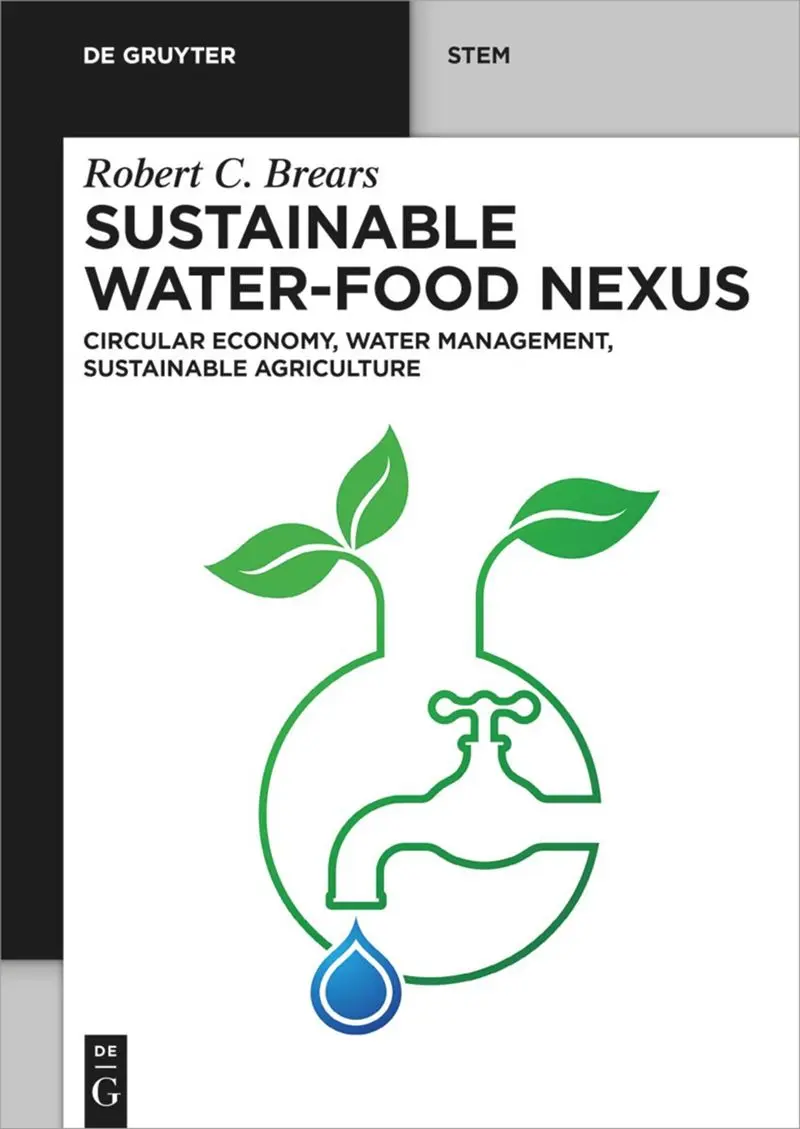
Sustainable Water-Food Nexus: Circular Economy, Water Management, Sustainable Agriculture. Edited by Robert C. Brears. De Gruyter, 2025.
Edited by Robert C. Brears and published by De Gruyter, this volume connects water management with sustainable agriculture and circular resource use. Its public overview covers water-efficient production, recovery, energy, emerging technologies and the policy and partnerships needed for implementation. These subjects provide context for agricultural scenario choices, helping readers connect a proposed technical change with the wider water and food system it affects.
Sources and further reading
Read the Global Climate Solutions source article, the Australian Space Agency account and the institute’s field and industry reflections.