

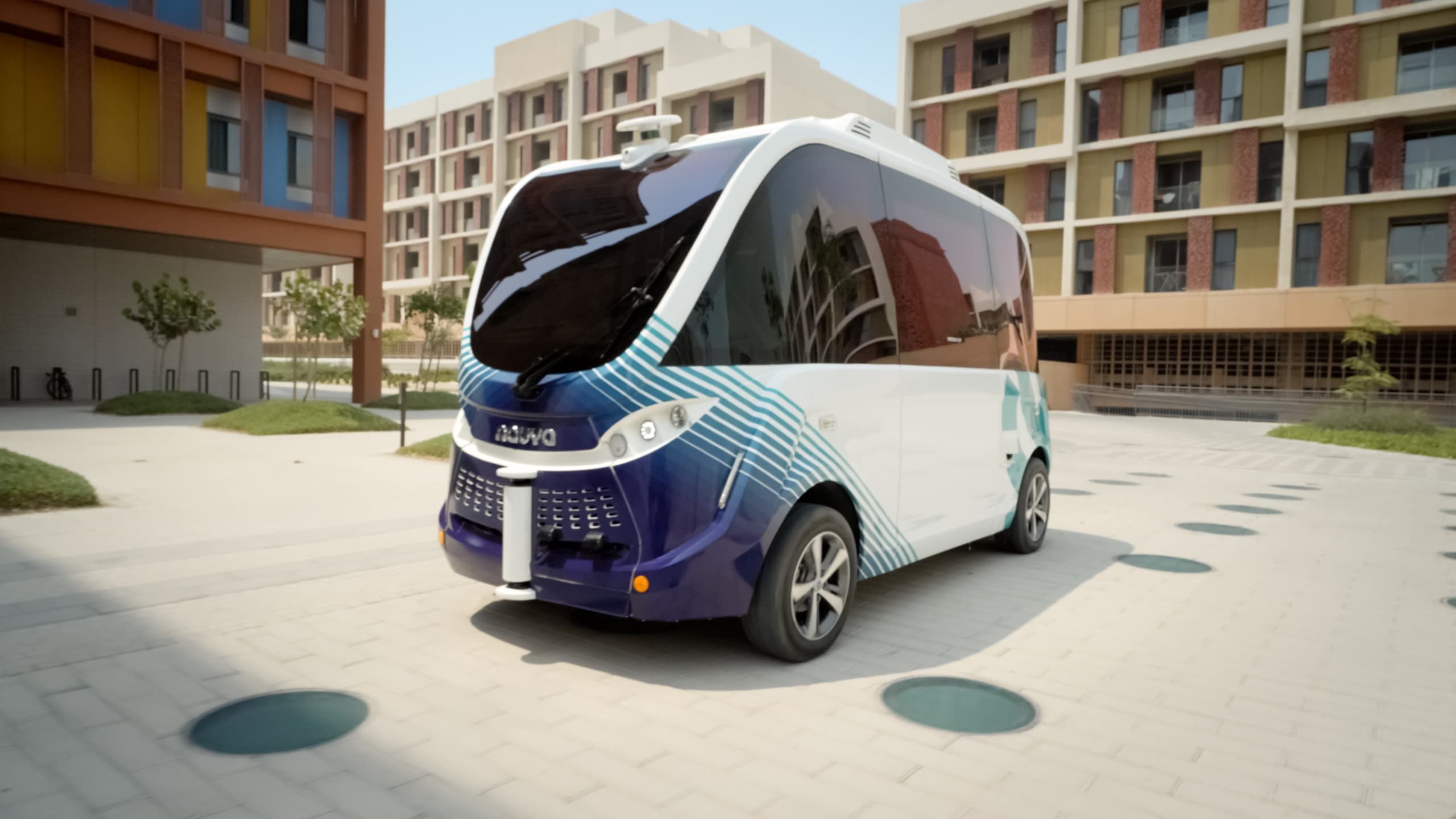
Urban transport systems face rising emissions, congestion, and land-use pressures that undermine climate and livability objectives. Traditional mobility models prioritise vehicle throughput over system efficiency and resilience. Shifting toward low-emission, integrated transport systems supports decarbonisation while improving urban accessibility. Read how Masdar City’s sustainable mobility system aligns with international benchmarks.
Integrated Green Transport Systems
Electric and low-emission transport systems reduce direct urban emissions while lowering exposure to fossil fuel price volatility. Their effectiveness depends on integration with land use, energy systems, and digital control infrastructure. Electrification alone does not deliver systemic benefits without coordinated routing, charging, and demand management. Cities that align vehicle technology with network design achieve higher utilisation and lower lifecycle impacts.
Autonomous and Smart Mobility Infrastructure
Autonomous mobility systems improve operational efficiency by optimising routing, speed, and spacing. Sensors, artificial intelligence, and geofencing enable vehicles to operate safely within defined corridors. These systems reduce labour constraints and support continuous service patterns. When deployed at district scale, autonomous mobility functions as shared urban infrastructure rather than a niche technology.
Pedestrian-First and Active Transport Design
Green transport systems prioritise walking and cycling as core mobility modes. Shaded pathways, connected street networks, and traffic calming reduce reliance on private vehicles. Active transport improves public health outcomes while reducing short-trip emissions. Integrating these modes with electric transit creates a balanced and resilient mobility hierarchy.
Policy and Regulatory Enablement
Effective green transport deployment relies on supportive regulatory frameworks. Zoning controls, vehicle standards, and operational approvals define where and how technologies operate. Regulatory sandboxes allow controlled testing while managing safety and liability. Clear institutional roles support coordination across transport, energy, and urban planning authorities.
Case Study: Masdar City Sustainable Mobility System
Masdar City integrates sustainable mobility through a combination of regulatory planning controls, technology deployment, and institutional coordination. The city’s master planning framework prioritises pedestrian movement and restricts private vehicle access within core areas, embedding low-emission transport as the default option. This planning approach establishes the legal basis for deploying autonomous and electric transport systems across defined zones.
The mobility system includes multiple electric and autonomous modes designed for different trip types. The Personal Rapid Transit system operates as an on-demand, fully electric pod network that replaces short car trips and eliminates local tailpipe emissions. Autonomous shuttle trials, including Level 4 vehicles, operate on geofenced routes under regulatory oversight by the Integrated Transport Centre, which defines safety, supervision, and operational requirements. These trials are conducted within approved testing programmes rather than open-ended deployment.
Technical standards govern vehicle operation, including sensor redundancy, geofencing, and route definition. Autonomous vehicles operate within fixed corridors linking key destinations, with initial human supervision transitioning to remote monitoring. Electric buses and shuttles are designed for extreme heat conditions, incorporating water-cooled batteries, lightweight materials, and energy-efficient climate control systems. These specifications address performance reliability rather than experimental demonstration.
Institutionally, Masdar City functions as a controlled testbed, coordinating developers, transport operators, and regulators. This structure enables phased implementation, technology retirement, and replacement without disrupting the wider system. Although some vehicles are no longer in active service, their deployment informed subsequent standards and system design. Collectively, the mobility framework reduces emissions, supports climate resilience, and demonstrates how regulation, technology, and urban form can align to deliver sustainable transport outcomes.
Conclusion
Green transport transformation depends on treating mobility as integrated urban infrastructure shaped by planning, regulation, and system design. When low-emission technologies operate within coordinated frameworks, cities can reduce emissions while improving accessibility, reliability, and long-term resilience.